
What is a perc test, and how do you get one for a lot in the Triangle?
How the septic soil evaluation works in Wake, Johnston, Chatham and Franklin counties, what it costs, the private soil scientist option, and what a failed lot means.
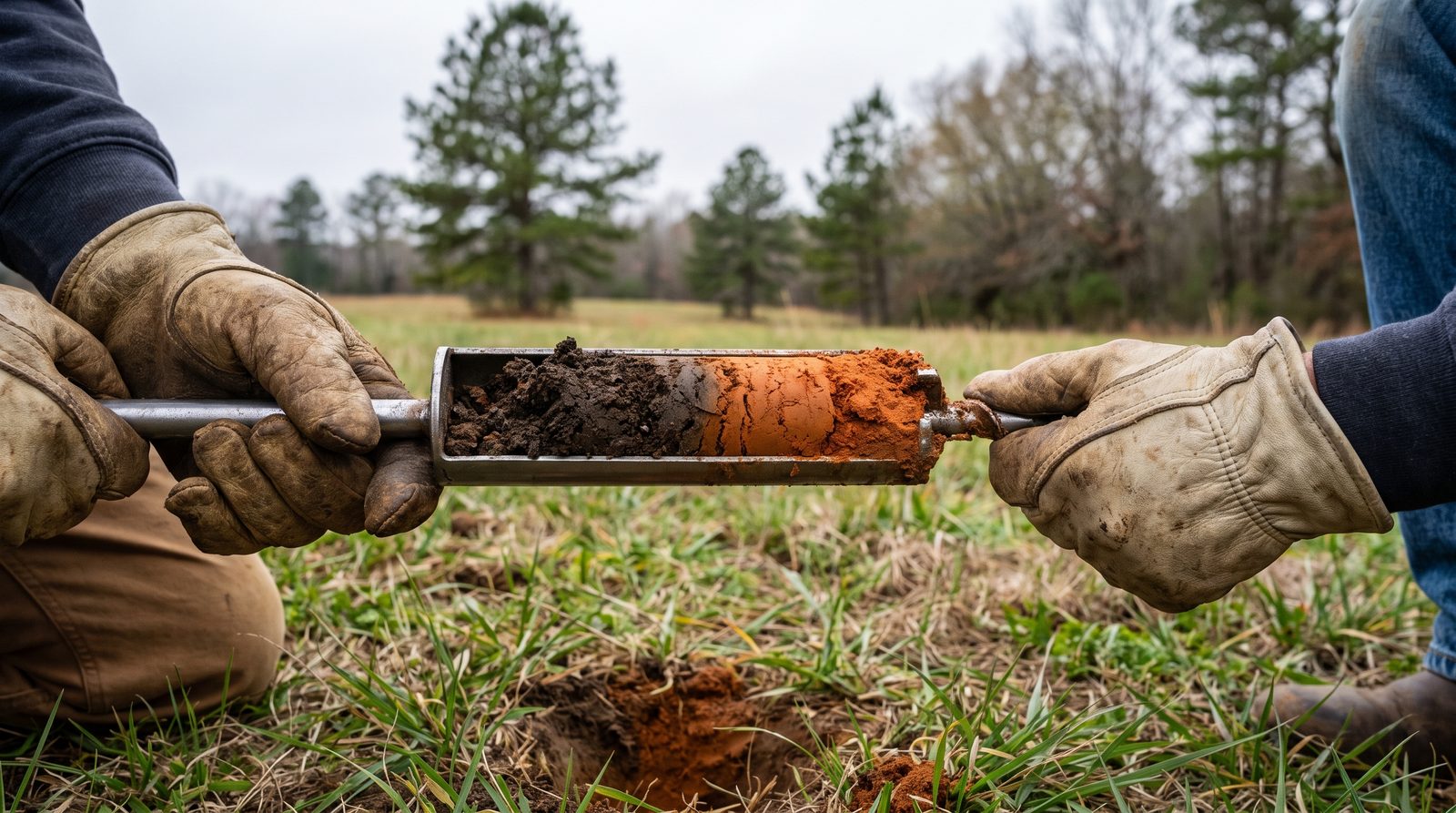
If the lot you love has no public sewer, it needs a septic permit before you can build, and the county health department decides whether the soil can take a system. In North Carolina, what most people call a "perc test" is a soil and site evaluation that leads to an improvement permit. Try to get that permit before you buy, or make your purchase depend on getting one.
What is a perc test, and why get one before you buy?
State law requires the local health department to do a full soil and site evaluation, looking at the lot's soils and slope, and an improvement permit must be in hand before work starts on the house or the septic system, according to NC State Extension's guide for land buyers.
Extension suggests four steps before buying a lot without sewer:
- Find out the soil types.
- Find out what kind of septic system, if any, will work.
- Get an improvement permit (IP) from the local health department.
- Get a cost estimate for that system.
The county soil survey can help you screen lots, but Extension says it isn't detailed enough to decide whether a lot can take septic, and good and bad soils can sit side by side on the same lot. Warning signs to look for as you walk a property:
- Gullies or steep slopes
- A nearby stream that could flood
- Wet or swampy ground, or designated wetlands
- Rock or bedrock
- Not enough room for the house, the septic system and a well
Room matters. Extension says your well, and your neighbors' wells, should be at least 100 feet from the septic system, and the lot also needs a "repair area" in case the system must be fixed or expanded later. It says one acre of suitable soil is usually the minimum, and much bigger lots are often needed.
When a permit comes back, ask whether it limits the number of bedrooms or where the house, driveway or pool can go. Extension says septic permits are valid for no more than five years, though some counties also offer a permit that doesn't expire (see Chatham below). Comparing several lots? Extension suggests applying on each one, or screening them yourself or with a soils consultant first if cost or time rules that out.
How do you apply in Wake, Johnston, Chatham or Franklin?
Wake County issues septic permits only outside town limits. To check a property, Wake says to enter the address in iMaps and look under GENERAL for "WC," which means county jurisdiction; for land inside a town, contact that town's planning department first. In the county's jurisdiction, you apply through the Wake Permit Portal by searching for "wastewater" or "septic." Wake's fee page lists $400 for the improvement permit (each evaluation limited to less than 3 acres) and $400 for the construction authorization, the go-ahead to install, for a total of $800.
Johnston County Environmental Health is at 309 East Market Street in Smithfield (919-989-5180, envhealth@johnstonnc.gov). Its septic application asks for the form, a site plan, a zoning document and the fee for each lot. Before the visit, the lot must be mowed or bush-hogged so staff can get around, with the corners flagged. The county warns not to disturb or reshape the soil while clearing: that can make a site unsuitable or call for a more expensive system. Johnston's fee schedule, effective July 1, 2025, lists $600 for a septic permit for systems of 480 gallons or less.
Chatham County has you apply with paperwork and fee, then an Environmental Health Specialist meets you on the property, where you show the house location and property corners, according to the county's permitting options page. If the soil is suitable, the IP is good for 5 years; Chatham also offers a permit that never expires if you send in a qualifying plat within 30 days of the evaluation. Chatham's improvement permit page requires a site plan and a flood plain determination from the planning department with jurisdiction. For current fees, call Chatham Environmental Health at 919-542-8460, weekdays 8 a.m. to 5 p.m.
Franklin County's Environmental Health fee schedule, which the page lists as effective August 15, 2016, shows $400 for a new septic system. Contact Franklin County Environmental Health for the steps for your lot.
Can you hire your own soil scientist?
Yes. North Carolina allows an Authorized On-Site Wastewater Evaluator (AOWE): a licensed soil scientist who is also certified by the state's septic contractors and inspectors board. Under the state law, an AOWE working for you can prepare signed and sealed soil and site evaluations and plans, but can't do work reserved for engineers.
You file a Notice of Intent to Construct with the health department; the fee can be no more than $35 by law (Johnston charges $35). Once the notice is complete and paid, you can apply for a building permit. The AOWE helps you pick a certified septic contractor, visits the site and, at the end, hands you the paperwork used for your certificate of occupancy.
Know the tradeoffs: the law says state and local health departments have no liability for AOWE systems, you're responsible for following the system's operation and management program, and if you sell, the system's Authorization to Operate passes to the new owner, but a Notice of Intent to Construct (before the system is approved) can't be transferred without the AOWE's written consent. The certification board's Evaluator List names current AOWEs. NCDHHS also lists an Engineer Option Permit route, with forms for each option.
What if the lot doesn't pass?
A failed conventional evaluation isn't always the end. Extension says a conventional system, a tank plus trenches 2 to 3 feet deep, works well in thick red or brown loamy soils. On soils too wet or shallow, a modified or alternative system may be possible, such as low-pressure pipe (LPP) or fill systems. Extension says an LPP may cost about twice as much to install as a conventional system and should be inspected every six months. Some sites can only use a sand-filter spray irrigation system needing 5 to 10 acres or more, and many soils can't take any alternative system. If a conventional system won't work, find out the installation and upkeep costs of the one that will before you commit.
Sources
- Investigate Before You Invest (AG-439-12) · NC State Extension · July 15, 2020
- Apply for a Permit · Wake County Onsite Water Protection
- Wastewater Fees · Wake County
- Application for Septic System and Well · Johnston County Environmental Health
- Environmental Health Fee Schedule · Johnston County · July 1, 2025
- Septic System Permitting Options · Chatham County
- Improvement Permit · Chatham County
- Fee Schedule · Franklin County Environmental Health · August 15, 2016
- G.S. 130A-336.2 (PDF) · NCDHHS Division of Public Health · August 10, 2023
- Private Permitting Options, Resources and Forms · NCDHHS Division of Public Health
- Certification List · NC Onsite Wastewater Contractor Inspector Certification Board · September 28, 2026
More on finding land

Finding land
Found a lot you like? What to check before you buy, and who to call
A walk through North Carolina's standard land contract, the checks it lets you make, and the Wake and Johnston County offices that can answer your questions.
Finding land
How to get a private well permit in Wake or Johnston County
Who issues the permit, who can drill, where the well can go, how deep Wake wells run, which water tests apply and what each county charges.
Finding land
How to find a Triangle lot's covenants and HOA rules before you buy
Where covenants are recorded in Wake, Johnston, Durham, Chatham and Franklin, what a North Carolina HOA can do, and what a seller must disclose.