
Found a lot you like? What to check before you buy, and who to call
A walk through North Carolina's standard land contract, the checks it lets you make, and the Wake and Johnston County offices that can answer your questions.

The short answer: check the soil for septic or the cost of sewer, water, the survey, title, zoning, flood risk, road access and any neighborhood rules, and finish all of it before your due diligence period ends. Under North Carolina's standard land contract, once that deadline passes you lose the right to walk away over anything you found. So order the soil, survey, zoning and road checks the day the contract is signed.
How does the due diligence period work?
North Carolina's standard land contract is Standard Form 12-T, the "Offer to Purchase and Contract – Vacant Lot/Land," approved by the NC Bar Association's Real Property Section and NC REALTORS. The version described here was revised in July 2024. NC REALTORS has revised the form twice since then, in July 2025 and again effective July 1, 2026, so ask your agent or attorney for the current version. A few things in it matter most:
- The due diligence fee. This is an amount you and the seller negotiate, if any. You pay it for the right to cancel "for any reason or no reason" during the period. It belongs to the seller once the contract takes effect, is credited to you at closing, and is non-refundable except in limited cases, such as the seller's material breach.
- The deadline. The period ends at 5:00 p.m. on a set date or a set number of days after the contract takes effect, and the form says "time is of the essence": the deadline is firm.
- How to cancel. You deliver a written Termination Notice before the period ends, and your earnest money is refunded. Miss it and you give up the right to cancel over anything related to due diligence. The seller does not have to grant an extension.
- No loan or appraisal contingency. The form tells buyers to talk to their lender before signing so the period leaves enough time for the loan.
If the seller is your builder, or has hired one to build a new single-family home before closing, the form says to use the New Construction form (Form 800-T) instead. If the house is already finished, it says to use the standard Offer to Purchase and Contract (Form 2-T) with the New Construction Addendum. It also should not be used to sell a lot from a subdivision plat (the official map of the lots) that has not yet been approved and recorded. If only a preliminary plat has been approved, the form can be used with an addendum drafted by an NC real estate attorney.
One more early check: the seller's Vacant Land Disclosure Statement, Form 142. It asks about streams, power lines, gravesites, drainage, flooding, wetlands, and any well or septic. According to Form 12-T, if you didn't get a signed copy before your offer, you can cancel without penalty, with any due diligence fee refunded, until the end of the third calendar day after the effective date. The disclosure form itself says it is no substitute for professional inspections.
What should we check on the lot?
Form 12-T lists what you may investigate at your own expense:
- Soil and environmental reports
- Septic: whether the County Health Department will issue a permit or written evaluation, or the cost to connect to public sewer
- Water: whether the county will issue a well permit, or the cost to connect to public water
- Restrictive covenants and owners' association documents
- Appraisal
- Survey: easements, setbacks (required distances from property lines) and boundaries
- Zoning, nearby land uses, planned roads and school attendance zones
- Flood hazards, wetlands, and whether a lender will require flood insurance
- Electric, gas, communications and stormwater, and how you reach the property
- Whether the road is public or private, who maintains it, and any private road maintenance agreement
- Special assessments
The form also notes that the governments handling taxes, zoning, schools and utilities may not match the mailing address, so confirm which town or county actually has the lot.
Who do we call in Wake County?
Wake issues septic permits in unincorporated areas, outside town limits. Look up the address in iMAPS; "WC" under GENERAL means Wake County. Inside a town, Wake says to call that town's planning department first. In the county's area, you apply for the wastewater permit and a building or zoning permit through the county Permit Portal.
To get a Wake lot ready for a soil evaluation:
- Submit a scaled site plan showing the property, driveways, easements, buffers and the proposed house located from at least three property lines.
- Flag all corners, and the property lines at least every 50 feet. Wake suggests a professional land surveyor if you're unsure where the corners are.
- Flag the house footprint, decks, patios, buffers and easements.
- Call 811 (free) at least three working days before staff visit. It does not mark private lines.
- Clear heavy brush and small trees, but remove no soil.
Questions go to Wake's Wastewater Information Specialist at wastewater@wake.gov or 919-856-7434. Wake's fee page lists $400 for an Improvement Permit and $400 for a Construction Authorization, $800 total for a new system. Wake's septic FAQs note that the county does not inspect septic systems for sales, and that existing permits can be looked up in the Permit Portal or iMAPS.
For zoning outside the towns, Wake County Zoning and Subdivision can be reached at Wake.planning@wake.gov. Deeds and plats can be searched through the Register of Deeds at 919-856-5460.
Who do we call in Johnston County?
Johnston County Environmental Health accepts a septic application only with a document from the planning and zoning authority, plus a site plan showing the state road number, driveway, house and setbacks. After you pay, a specialist calls to schedule the evaluation; you rough-stake the area and house site. If the lot works, it must be surveyed and a plat submitted. The septic permit is released once you have the zoning permit. The office is at 309 E. Market St., Smithfield, 919-989-5180.
Johnston's fee schedule, effective July 1, 2026, lists $600 for a septic permit (480 gallons or less) and $400 for a private well permit. A new well must test free of coliform bacteria before it is approved.
What about title, flood and the road?
Under Form 12-T, you pay for the title search, title insurance and deed recording, and the seller must deliver marketable, insurable title. North Carolina's Flood Risk Information System provides flood hazard data and maps. A driveway onto a state road needs an NCDOT driveway permit; NCDOT says to contact the local land-use office first, then the local District Engineer.
Sources
- Standard Form 12-T, Offer to Purchase and Contract – Vacant Lot/Land (rev. 7/2024) · NC Bar Association Real Property Section / NC REALTORS
- Standard Form 142, Vacant Land Disclosure Statement (rev. 7/2025) · NC REALTORS
- Apply for a Permit (septic) · Wake County
- How to Apply for a Wastewater Permit · Wake County
- Wastewater Fees · Wake County
- Septic System Permitting FAQs · Wake County
- Zoning and Subdivision · Wake County
- Register of Deeds · Wake County
- On-Site Wastewater (Septic Systems) · Johnston County Environmental Health · May 11, 2026
- Private Drinking Water Wells · Johnston County Environmental Health
- Environmental Health Fee Schedule · Johnston County Environmental Health · July 1, 2026
- NC Flood Risk Information System · NC Emergency Management
- Driveway Permit FAQ · NCDOT
- iMAPS · maps.raleighnc.gov
- Permit Portal · wakecountync-energovpub.tylerhost.net
More on finding land
Finding land
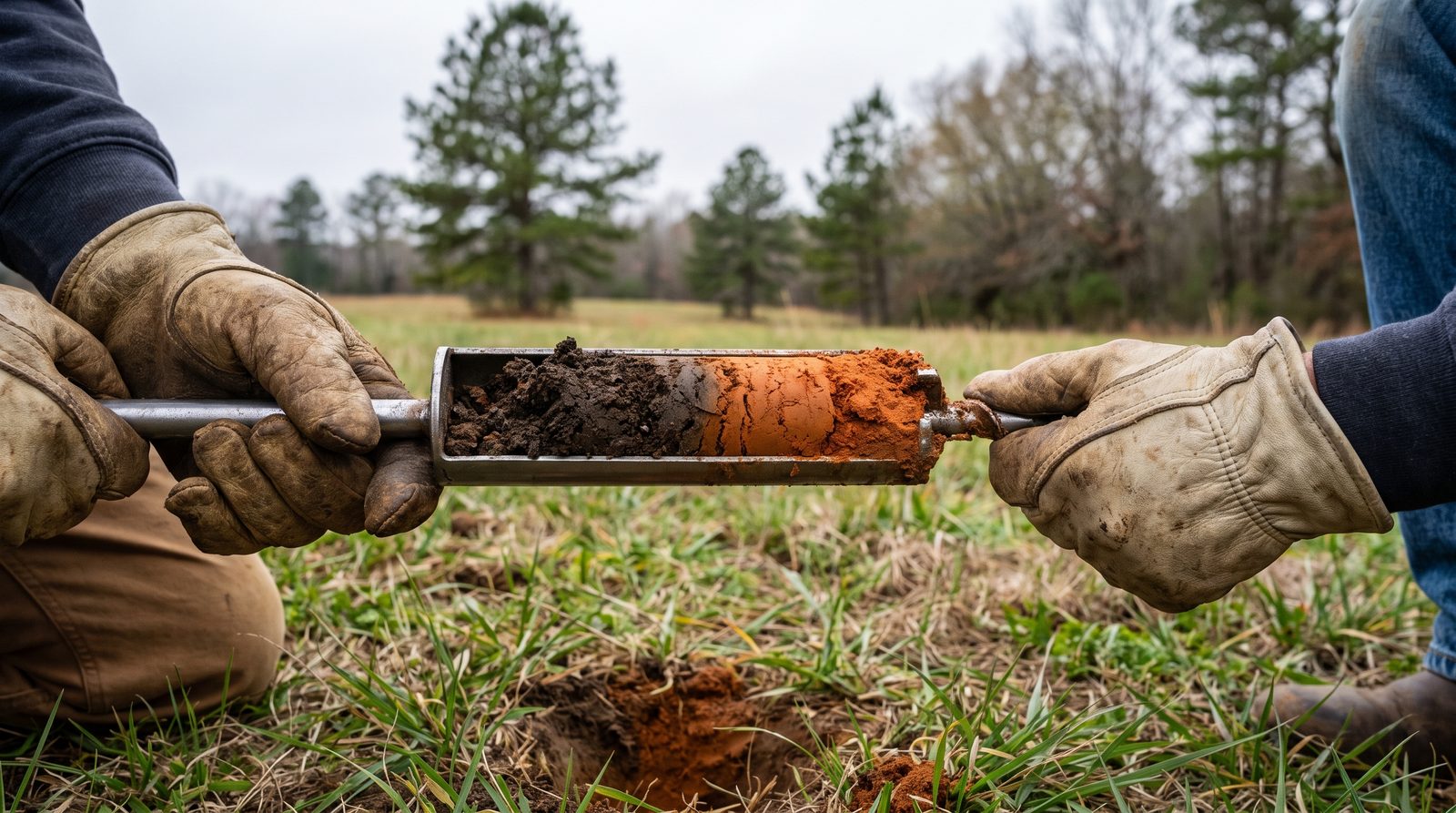
What is a perc test, and how do you get one for a lot in the Triangle?
How the septic soil evaluation works in Wake, Johnston, Chatham and Franklin counties, what it costs, the private soil scientist option, and what a failed lot means.
Finding land
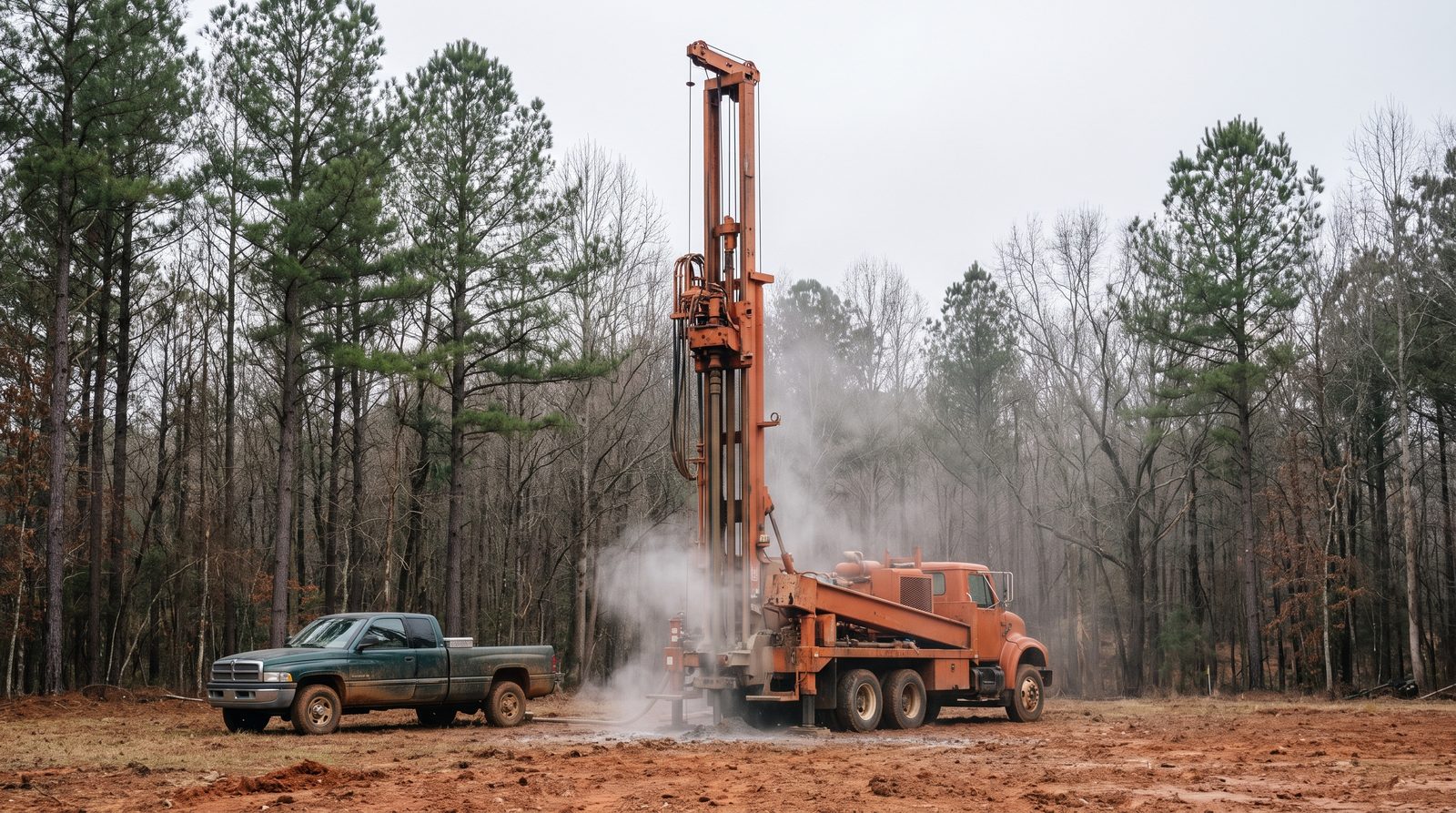
How to get a private well permit in Wake or Johnston County
Who issues the permit, who can drill, where the well can go, how deep Wake wells run, which water tests apply and what each county charges.
Finding land
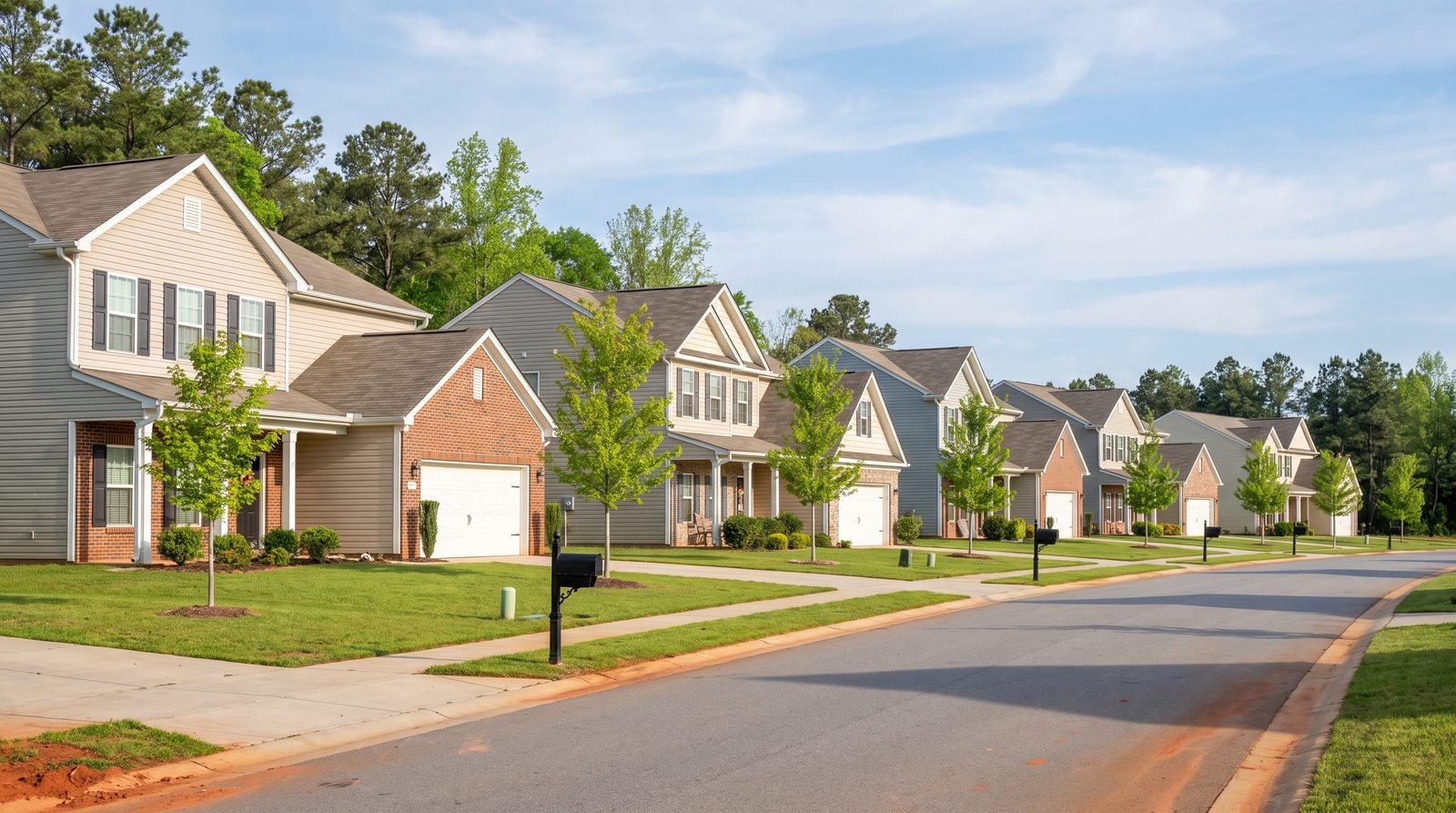
How to find a Triangle lot's covenants and HOA rules before you buy
Where covenants are recorded in Wake, Johnston, Durham, Chatham and Franklin, what a North Carolina HOA can do, and what a seller must disclose.