
How to find a Triangle lot's covenants and HOA rules before you buy
Where covenants are recorded in Wake, Johnston, Durham, Chatham and Franklin, what a North Carolina HOA can do, and what a seller must disclose.
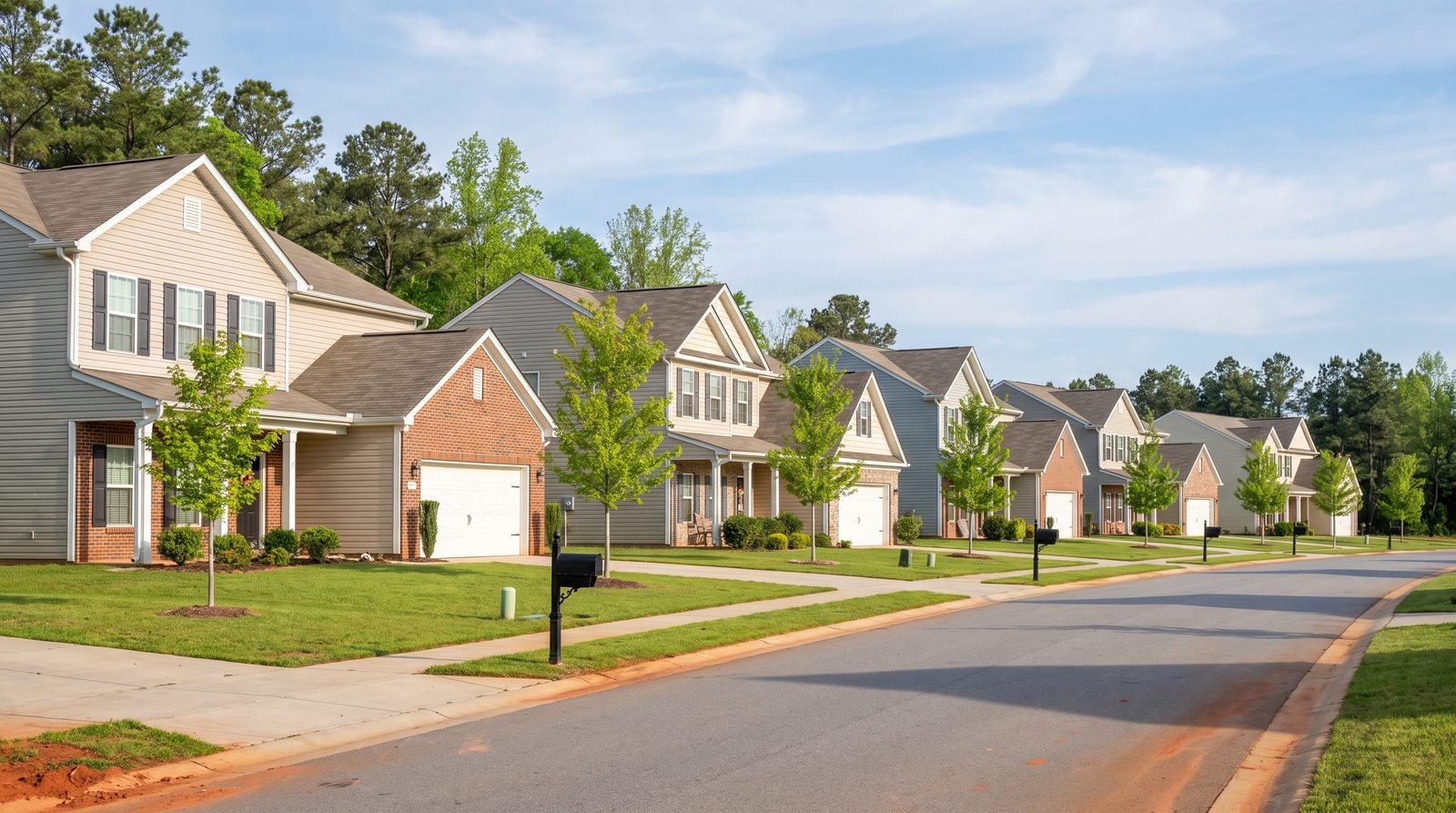
A lot's restrictive covenants, and the declaration that sets up a homeowners association (HOA), are public records. They are kept at the Register of Deeds in the county where the land sits, and you can search most Triangle counties' records online. Read them before you commit: they can limit what you build and bring dues, fines and liens. The state's disclosure law is written for homes, not empty lots, so plan to find the papers yourself.
Where are a lot's covenants kept?
Restrictive covenants are private rules recorded with the land, separate from town zoning. For planned communities, state law (G.S. 47F-2-101) says the declaration, the main covenants document, must be signed like a deed and recorded in every county the community touches. That is why the Register of Deeds has it.
- Wake: The Register of Deeds records deeds, survey maps and restrictive covenants, with some records going back to 1785. You can search them in the county's online Consolidated Real Property Index, linked from that page. The Register of Deeds is Tammy Brunner.
- Johnston: In the county's online document search, deed records are indexed from January 3, 1989, and plat, condo and highway right-of-way maps are fully indexed. Older records are in a separate "Historical Index." The office, led by Craig Olive, is at 207 East Johnston Street, Suite 209, Smithfield (919-989-5160), open 8 a.m. to 5 p.m. weekdays.
- Durham: The Register of Deeds has an online database of recorded real estate documents. The county says the certified record, including historical indexes, is at the office at 201 East Main Street, 2nd Floor (Durham County Administration Building II), Durham.
- Chatham: Deeds can be searched through the Register of Deeds Remote Access Site. The office, led by Lunday Riggsbee, is at 12 East Street, Pittsboro (919-542-8235). It also offers a fraud alert that emails you if a document with your name is filed.
- Franklin: The county's index search page has tips for finding a subdivision's covenants, below.
How do you search for a subdivision's covenants?
- Confirm the county. A community that crosses a county line has its declaration recorded in each county.
- Search by subdivision name. In Franklin, the county suggests a name search with the subdivision name typed in the "Firm/Last Name" field. That index covers 1950 to today; documents from 1896 to 1949 are in the "Old Index Books" search. If you know the book and page, "View Images" is fastest. For plats recorded since 1989, enter the year as the book number, then the page.
- Look for amendments. Covenants can change. Under G.S. 47F-2-117, owners holding at least 67% of the HOA votes can amend a declaration, or a higher share if the declaration requires it. An amendment takes effect only when recorded, and a challenge must be filed in court within one year of recording.
- Get help reading them. Chatham's office says it stores records but does not write documents or fix mistakes in them. For what a covenant means for your plans, ask a real estate attorney.
In older deeds you may meet troubling language. Wake's Register of Deeds and volunteers searched about 600,000 pages and found about 15,000 deeds with racially restrictive covenants, now shown on a searchable public map. The oldest on file is from 1906.
What can an HOA in North Carolina actually do?
The Planned Community Act covers communities created on or after January 1, 1999. It does not cover newer communities with 20 or fewer lots unless their declaration opts in. Many key sections, including HOA powers, fines, assessments and liens, also apply to older communities unless their papers say otherwise.
Unless its own documents say otherwise, an HOA may adopt rules and budgets, collect assessments (dues), regulate common areas and charge late fees of up to $20 a month or 10% of the unpaid installment, whichever is greater. After notice and a chance to be heard, it may suspend privileges (but not access to your lot) once dues are 30 or more days late, and may fine owners for breaking the rules.
- Fines: Unless the declaration sets its own process, you get a hearing first. A fine can be up to $100 per violation, plus up to $100 a day if the violation continues more than five days after the decision. You can appeal a panel's decision to the full board within 15 days. Fines can become liens.
- Budgets: A budget stands unless a majority of all owners votes it down.
- Liens: Under G.S. 47F-3-116, an assessment unpaid for 30 days or more becomes a lien (a legal claim on your property) when filed with the clerk of superior court. After 90 days unpaid, and a board vote on that specific lot, the HOA can foreclose. A lien made up only of fines can be foreclosed only through a court case.
- Empty lots: The HOA does not have to mail certain lien notices to an address it knows is a vacant lot, or to a lot with no postal address. Make sure the HOA has your real mailing address.
- Before closing: An HOA may charge up to $200 for a statement of unpaid assessments and must provide it within 10 business days.
Changes have been proposed. House Bill 444, the "Homeowners Association Reform Bill," would change HOA powers and require mediation before HOA-owner lawsuits. The UNC School of Government's legislative tracker lists its latest action as a May 6, 2025, re-referral to a House committee.
What does the seller have to tell you?
G.S. 47E-4 requires an owners' association and mandatory covenants disclosure statement covering the HOA contact, dues, what dues pay for, approved special assessments, pending lawsuits and transfer fees. The property disclosure must also cover restrictive covenants and zoning. Statements are due by the time you make an offer, or you may be able to cancel within a short window.
But the Residential Property Disclosure Act covers property with one to four dwelling units, and it exempts the first sale of a never-lived-in home from the property and HOA disclosure statements (G.S. 47E-4), though not from the separate mineral, oil and gas rights disclosure. Because the law is written for homes, ask a real estate attorney what disclosures, if any, come with an empty lot.
Sources
- Recording and Real Estate · Wake County Register of Deeds
- Racially Restrictive Covenants Project · Wake County Register of Deeds
- Document Search (guest) · Johnston County Register of Deeds · September 30, 2026
- Online Public Records Search · Durham County Register of Deeds
- Register of Deeds · Chatham County
- Index Search · Franklin County Register of Deeds
- Chapter 47F, North Carolina Planned Community Act · NC General Assembly
- G.S. 47F-3-116 · NC General Assembly
- G.S. 47E-4 · NC General Assembly
- Chapter 47E, Residential Property Disclosure Act · NC General Assembly
- Homeowners Association Reform Bill (H 444) · UNC School of Government LRS · May 6, 2025
More on finding land

Finding land
Found a lot you like? What to check before you buy, and who to call
A walk through North Carolina's standard land contract, the checks it lets you make, and the Wake and Johnston County offices that can answer your questions.

Finding land
What is a perc test, and how do you get one for a lot in the Triangle?
How the septic soil evaluation works in Wake, Johnston, Chatham and Franklin counties, what it costs, the private soil scientist option, and what a failed lot means.
Finding land
How to get a private well permit in Wake or Johnston County
Who issues the permit, who can drill, where the well can go, how deep Wake wells run, which water tests apply and what each county charges.