
How to look up a lot's zoning and see how big your house can be
Where to find a lot's zoning in Raleigh, Cary, unincorporated Wake County and Johnston County, and how setbacks, height limits and hard-surface caps shape where your house sits and what you can add.
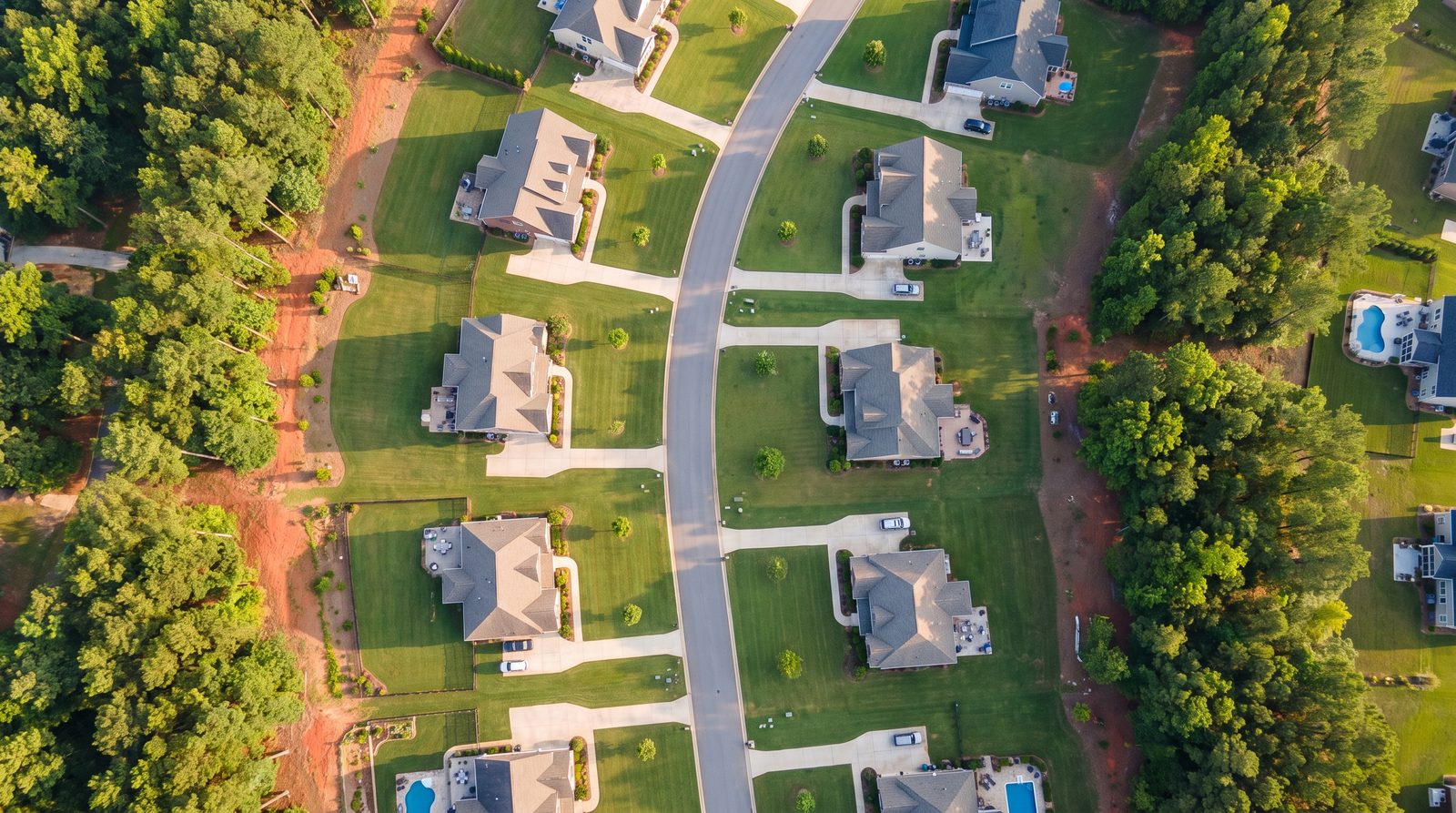
Before you buy a lot or draw a floor plan, find out two things: the lot's zoning district and what its recorded plat says. Together they set how far the house must sit from the street and property lines, how tall it can be, and how much roof, driveway and patio the lot can hold. This guide covers Raleigh, Cary, unincorporated Wake County and Johnston County, and each has a free online map that shows the zoning.
How do I find my lot's zoning?
Start with the right map for the place. A lot inside city or town limits follows that town's rules. A lot just outside them may still follow the town's rules if it sits in the town's extraterritorial jurisdiction (ETJ); otherwise it follows the county's.
In Raleigh. The city's planning department says learning a lot's zoning is the first step to knowing what can be built there. Zoning covers land use, building size, height and setbacks (the required distance between a building and the street or property lines). The city calls iMAPS, a web map run by Wake County, the easiest and most accurate way to look it up:
- Open iMAPS and click the Layers icon.
- Turn on Property. Then, under Planning and Development, turn on Zoning > "Raleigh Zoning" and Zoning Overlay Districts > "Raleigh Overlay Districts."
- Search by address, parcel ID number (PIN), real estate ID or owner.
- Use the Identify tool (the "i") and click the parcel to see its zoning and overlays.
- If the parcel has zoning conditions, click "Link to Conditions" at the bottom of the Raleigh Zoning pop-up.
Raleigh has five residential districts: R-1, R-2, R-4, R-6 and R-10. The rules for a detached house under the city's Conventional Development Option are in section 2.2.1 of the city's development code, and lots zoned R-4, R-6 or R-10 may also have to meet "Residential Infill Compatibility" standards. On flag lots, where a narrow strip reaches the street and the buildable area sits behind, the city allows only Tiny Houses and no accessory dwellings.
In Cary. The town's planning FAQ says to enter the address or 10-digit PIN in Cary's Property Research Map with the Zoning layer on. Then use the matching "Permitted Uses & Setbacks" table: Town Center for "TC," Walnut Street Corridor for "CT," and the Town-wide table for other zoning except PDD. Two codes to watch for: a "P" at the end in Wake County records (like R-8P) means the lot is really in a Planned Development District or Town Center, and a "CU" (like R-8CU) means conditional-use zoning with conditions tied to that property. For those conditions, Cary says to call Planning and Development Services at 311 or (919) 469-4046.
In unincorporated Wake County. The county says each zoning district sets allowed uses and how intensely land can be developed. R-30 is the most common, with a maximum of 1.45 homes per acre. A "W" in the name, as in R-80W or R-40W, means the land drains to a public drinking-water source, so development is kept light. Some areas also sit in overlay districts, extra rules layered on top, such as those around Robersons Pond and Bass Lake.
In Johnston County. Every parcel has a zoning designation, and most of the county is Agricultural-Residential (AR), which allows single-family and two-family homes and farming. The county says to check zoning on its MapClick GIS, and planners can be reached at (919) 989-5150.
Where on the lot can the house sit?
Setbacks draw an invisible box inside your lot lines. In Johnston County's AR district, the county code sets these minimums for development at one home per acre:
- 70 feet from an arterial or collector street (a 60-foot buffer plus 10 feet)
- 50 feet from a local street not in a major subdivision
- 25 feet from a local street in a major subdivision
- 10 feet from an interior lot line
- 15 feet from an access easement
At 1.5 homes per acre, the local-street setback in a major subdivision drops to 20 feet and the interior lot line to 5 feet. Homes may be no taller than 40 feet, and sheds or other accessory buildings must sit at least 10 feet from interior property lines. Lots in major subdivisions also carry utility and drainage easements along the road and lot lines. Johnston County is writing a new development ordinance, so these AR figures may change.
Easements matter too. Cary says that typically nothing, not even landscaping, is allowed in an easement unless unusual circumstances exist and the easement holder approves.
How much roof, driveway and patio can I add?
Wake County caps impervious area, the hard surfaces that keep rain from soaking in, lot by lot. In Swift Creek the limit is 6% or 12%. Elsewhere in unincorporated Wake the residential maximum is 30%, but a subdivision's stormwater permit may set 15% or a specific square footage. To find yours:
- Find the lot on iMaps.
- Open the subdivision's recorded plat through the "Book of Maps" link under the deed information.
- Read the lot's limit in square feet. If none is shown, call Wake County Watershed Management at 919-856-7436. Inside a town, ask that town's planning office.
A 2024 state law (Session Law 2024-49), in effect since September 11, 2024, means some things don't count, including slatted decks, pool water area, and No. 57 stone at least 4 inches thick over fabric.
What if the rules don't fit my plans?
In Johnston County, if the zoning doesn't allow what you want, you will likely need to rezone first, which generally takes about four months. In unincorporated Wake, a lot over its hard-surface limit may be able to get extra allowance from another lot in the same subdivision and phase if the plat shows a maximum impervious surface area and a perpetuity statement (both lots must be re-recorded); replace certain hard surfaces with gravel or artificial turf; or, if the plat shows no such maximum, get a permit for stormwater measures like rain gardens. In Raleigh, a Zoning Verification Letter, requested through the city's permit portal, confirms a parcel's zoning and conditions in writing. The Permit Helpline is 919-996-2500.
Sources
- Find My Zoning · City of Raleigh · July 14, 2026
- Residential Districts in the UDO · City of Raleigh · April 21, 2025
- Planning Department FAQ · Town of Cary
- Zoning Districts · Wake County
- Watershed Management FAQ (Impervious Surfaces) · Wake County
- Zoning and Rezoning Information · Johnston County Planning & Zoning
- Sec. 14-75 Agricultural-residential district (AR) · Johnston County Code (American Legal Publishing)
More on permits and rules
Permits and rules
Can you build on a Triangle lot with a creek or pond?
How the state's 50-foot stream buffers in the Neuse and Jordan Lake areas shape where a house, septic system and driveway can go, and who decides.
Permits and rules
Can you build a backyard cottage or in-law suite on your Triangle lot?
What Raleigh, Durham, Cary, Wake County and the new state law say about ADUs, and what to check before you plan a second home on your lot.