
Building a home in Johnston County: which offices handle permits, septic, water and schools
Which office gives you the permit, the order to get septic, well or water approvals, how to look up schools, and who to call in Johnston County.
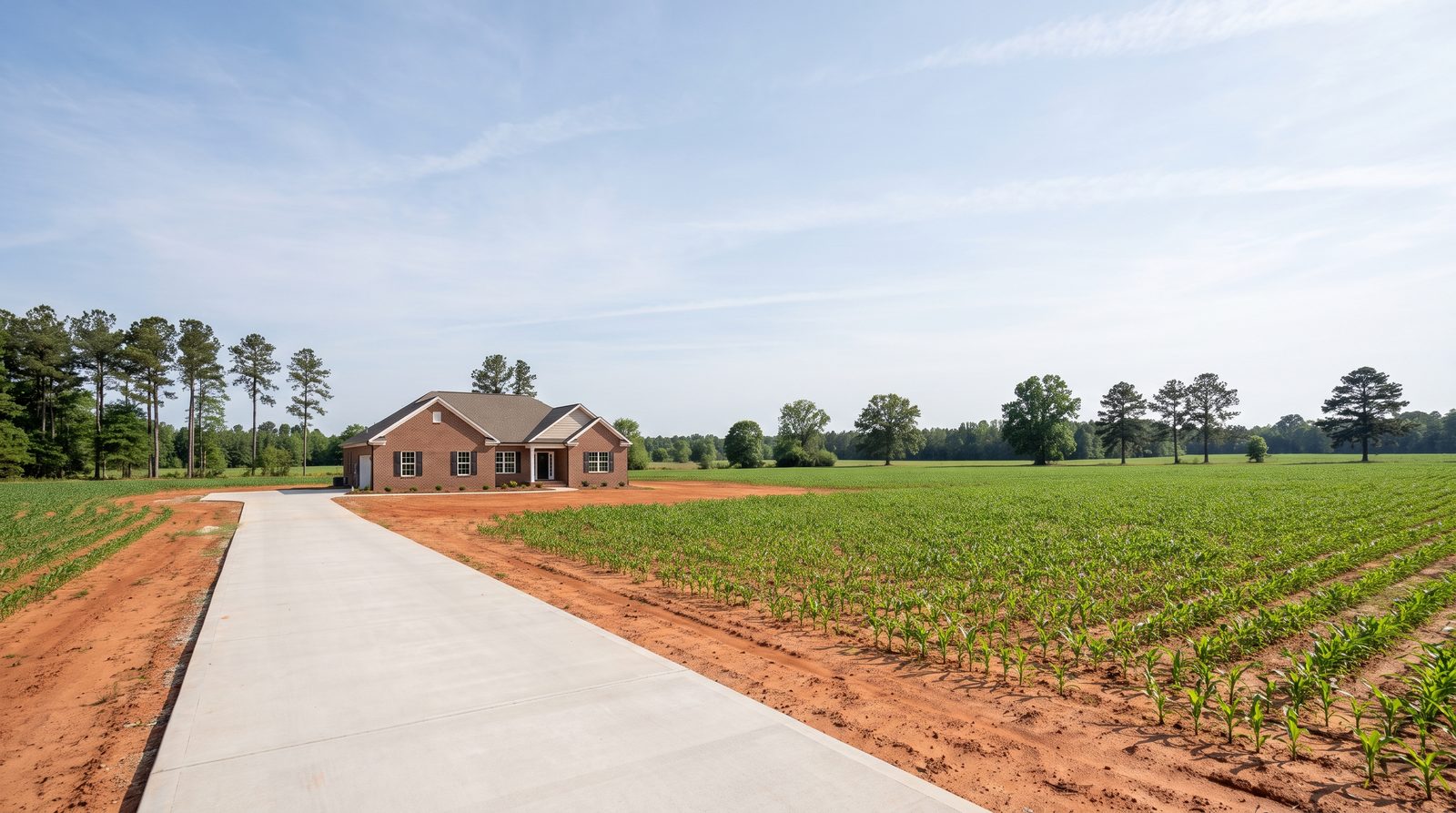
In most Johnston County towns, the town handles zoning but the county issues the building permit. Clayton and Four Oaks are the exceptions, and only inside their town limits. Septic, well and county water approvals come before the building permit. Most of the county offices share one building in Smithfield, so a single trip can often cover several steps.
Which office gives you the building permit?
Most towns in Johnston County don't run their own building inspections. According to the county's list of where to get building permits by town, Archer Lodge, Benson, Kenly, Micro, Pine Level, Princeton, Selma, Smithfield and Wilson's Mills rely on Johnston County Building Inspections for building permits and code inspections.
In those towns, you start at the town's planning or zoning department for a zoning or land use permit. Once the town confirms your plans meet its zoning, setbacks and development codes, you take that approval to County Building Inspections in Smithfield.
Clayton and Four Oaks issue their own building permits and do their own inspections, but only for property inside town limits. Watch the mailing address: the county says a lot with a Clayton address that sits outside the town boundary, in unincorporated Johnston County, still goes through the county. If you're unsure, the county's how-to-apply page links to a "Find Your Permit Office" lookup.
The zoning permit itself comes from the county, or from the town if the land is inside town limits or in the town's extraterritorial jurisdiction (ETJ), a band of land outside town limits where the town's rules apply, according to the county's building permit requirements. Smithfield, for example, says in its planning FAQs that its ETJ reaches two miles around the town limits, and its Planning Department has a map of both boundaries. Smithfield contracts with the county for building permits, so you get a town zoning permit first. Benson's planning, zoning and inspections page has the town's forms and online permit payment; it asks you to put your permit number in the payment's reference field.
What order do the steps go in?
The county Planning Department lays out the steps:
- Get a site address. Planning can help if you don't have one.
- Apply for county water service, or get a well and septic permit if the property will have a well.
- Get a zoning permit.
- Prepare a site plan that meets the county's requirements.
- Submit the residential plan review and permit application to Building Inspections. The county says to allow 7 to 10 business days for review.
For the application, the county asks for:
- the completed application and a completed site plan
- construction drawings, in digital form only (the county says it will not accept paper plans)
- a copy of the septic permit
- a copy of the well permit, or a Public Utilities receipt showing the water tap is paid
- a lien agent form from liensnc.com, which the county requires for projects with a total job cost of $40,000 or more
You can email the application to inspections@johnstonnc.gov or drop it off with digital plans. The county takes major credit cards, checks to Johnston County Inspections, and cash. Building Inspections is at the Land Use Center, 309 E. Market Street, Smithfield, 919-989-5060, weekdays 8 a.m. to 5 p.m. Zoning and site plan rules can change, so confirm current requirements with County Planning at (919) 989-5150 before you draw up plans.
How do septic and well permits work?
Both come from Johnston County Environmental Health, which has one application for septic and well. You apply with a document from the right planning and zoning office and a site plan showing the lot's shape and size, the state road number, the driveway and house, and setbacks from the road right-of-way and at least one other property line.
After you pay the fees, a specialist calls to schedule a site evaluation. Before the visit, rough-stake the area to be evaluated and stake where the house will go. If the lot is suitable, it must be surveyed and a plat (a surveyed map) submitted for final review, with a plat fee. The septic permit is released once you have a proper zoning permit and all fees are paid.
One detail the county stresses: the number of bedrooms on the septic permit should match the number of bedrooms actually in the house.
Before final inspection and permanent power, Environmental Health must sign off on water and sewer. That needs the septic system and well installed and inspected, the driller's well log on file, and a negative bacteria test of the well water. Your assigned specialist can take the sample, with results in about a week, or a private lab's certified technician can. Septic systems with an effluent pump must be inspected every five years under state rules.
Environmental Health is also at 309 E. Market Street, (919) 989-5180, weekdays 8 a.m. to 5 p.m. Specialists are in the office from 8 to 9:30 a.m.
How do you hook up to county water and sewer?
You must apply to Johnston County Public Utilities before service is connected, online through SignNow or by fax; the county asks you not to use unsecured email. As of the page's June 9, 2026 update, fees were a $75.00 deposit per new account (waived with a letter of good credit) and a $30.00 application fee for water only or $45.00 for water and sewer. Public Utilities' main line is 919-989-5075.
The county isn't the only provider. Its lines appear on the county GIS map under the "utilities" layer, and outside towns, county sewer depends on its Residential Sewer Service Policy and on downstream capacity, according to its development information page. On town water and sewer, the town gives written approval for the hookup.
How do you find out which schools the house is assigned to?
Johnston County Public Schools has a School Finder: enter the physical address. The district says the data comes from county GIS and may change. Boundaries have shifted recently: Swift Creek Elementary opened in fall 2025, and Wilson's Mills High opens in fall 2026, adding a grade a year until it offers grades 9 through 12 in 2028. The district office is at 919-934-6031.
Sources
- Where to Get Building Permits by Town · Johnston County Building Inspections · August 17, 2026
- How to Apply for a Building Permit · Johnston County Building Inspections · August 17, 2026
- Building Permit Requirements · Johnston County Building Inspections · April 7, 2026
- Building Permit Process · Johnston County Planning and Zoning · July 23, 2025
- On-Site Wastewater (Septic Systems) · Johnston County Environmental Health · May 11, 2026
- Apply for Water/Sewer Service · Johnston County Public Utilities · June 9, 2026
- Private Development Water and Sewer Project Information · Johnston County Public Utilities
- Planning FAQs · Town of Smithfield
- Planning, Zoning and Inspections · Town of Benson
- Student Assignment Maps · Johnston County Public Schools
More on towns and counties

Towns and counties
How to find out which public schools your Triangle address is assigned to
How to look up assigned schools in Wake, Johnston, Durham, Chatham and Franklin, why Wake's answer can change after you buy, and who to call.
Towns and counties
Building a home in Apex: permits, water and sewer, fees and who to call
Where your Apex lot sits decides how you get water and sewer, whether you need annexation, and what you pay. Here are the steps, fees and phone numbers.
Towns and counties
How to build a home in Chatham County: permits, septic, wells and stream buffers
Who issues your building permit in Pittsboro, Siler City or the countryside, how septic and well permits work, and how stream buffers can shape your lot.