
How to get electricity to an empty lot in the Triangle, and who pays for the line
How to find out which utility serves your lot, how to apply for new service, and what two local co-ops' posted rules say about line-extension costs.
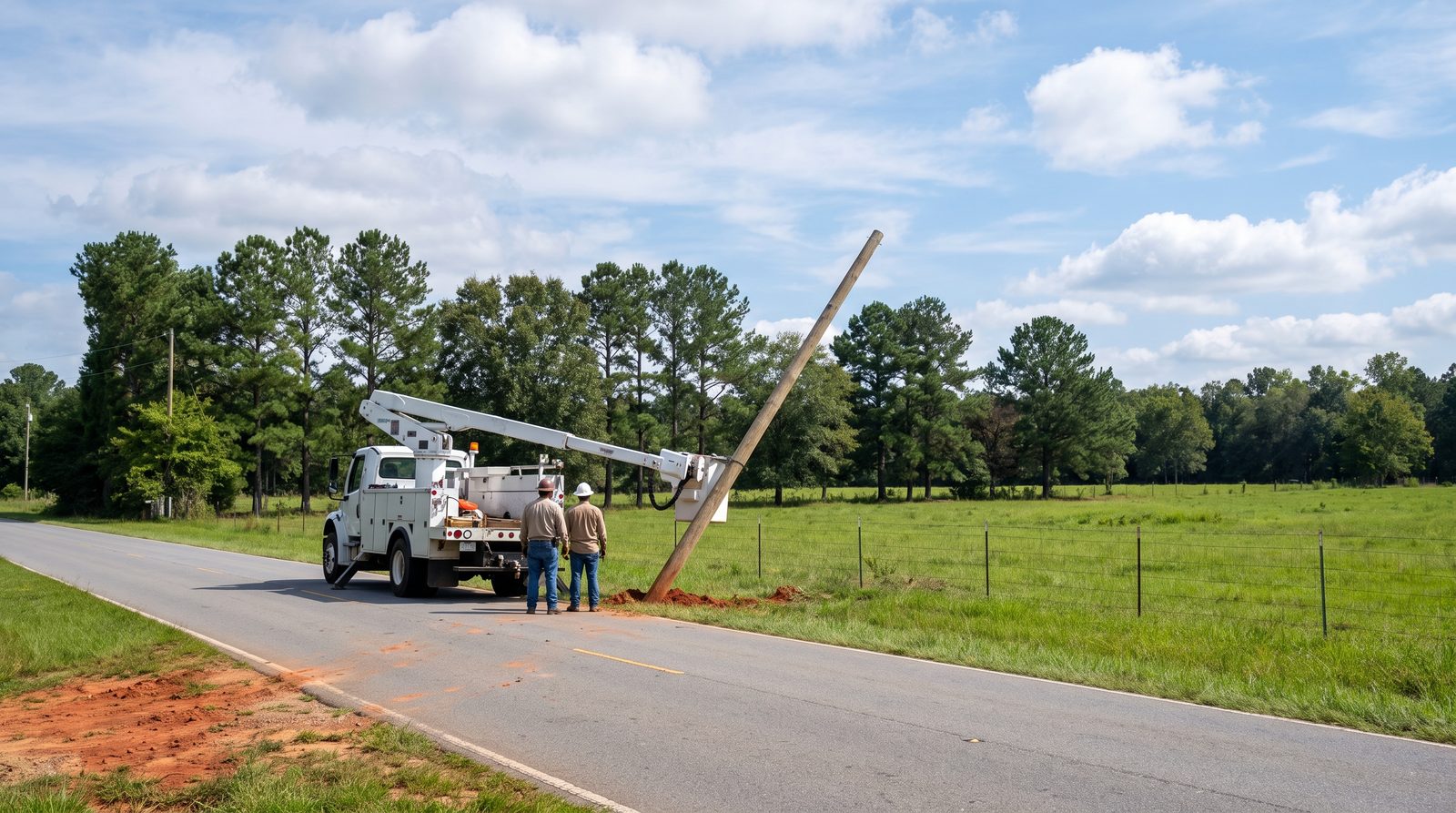
Bringing power to an empty lot starts with one question: which utility serves it? In the Triangle that could be Duke Energy, an electric cooperative or a town-owned utility, and each sets its own rules for applying and for who pays to run a line. Some of that cost can land on you, especially if the house sits far from the road, the line follows a private road, or you want it underground.
Who provides electricity to my lot?
You can't assume the answer from the town name on your address. North Carolina has 26 locally owned electric cooperatives, and their statewide association's "Find Your Co-op" page has an interactive map and a printable map of each co-op's service area. According to the statewide service area map, co-ops serve 93 North Carolina counties and about 45 percent of the state's land. Co-ops headquartered in nearby towns include Wake Electric (Wake Forest), Piedmont Electric (Hillsborough), South River EMC (Dunn), Central Electric (Sanford) and Randolph EMC (Asheboro).
Some towns run their own utility. Wake Forest Power is a division of the Town of Wake Forest and serves nearly 9,000 homes and businesses; its page has a "Find my electric provider" map.
Don't rely on the county or town name. The surest step is to call the utility you think serves the lot and give them the parcel address.
How do we apply for new service?
Each provider handles this differently.
Duke Energy. Duke's builder page says the builder submits work orders to Duke through its online Builder Portal and tracks them there. Ask Duke for the current steps that apply to your lot.
Duke's builder page shows the Builder Line number for your area once you enter the lot's address. The line is open Monday to Friday, 7 a.m. to 6 p.m.
Wake Electric. Under its Service Rules and Regulations, effective September 1, 2025, you submit an online membership application, and the co-op must approve it before power is connected. Its schedule of charges lists a $5.00 membership fee, a $20.00 connection charge and a $50.00 residential temporary service charge, and a deposit may be required. You must also sign any needed right-of-way easements (permission for the co-op to place and reach its lines on your land). Before it can finish engineering, driveway entrances and streets must be graded to within six inches of final grade and lot lines established. Its new-construction page says builders must have a signed Underground Construction Release Form on file before services are built; the phone numbers there are 919-863-6300 and 1-800-474-6300.
South River EMC. A rules and line extension policy posted on its website (file dated 2022) says service starts once your application (written, verbal or online) is complete, you've shown ID and proof of ownership or lease, and any money owed, including any construction contribution, is paid. A new home needs a $375 deposit.
Piedmont Electric. For a site with no power yet, Piedmont says to call 800.222.3107. Its homeowner new construction form asks whether the temporary pole is set and what service size you need. Piedmont says staff answer new-construction requests within a few business days.
Wake Forest Power won't start service by phone. You fill out the Residential Utility Application online or at a kiosk in Town Hall, 301 S. Brooks St. Customer service is 919-435-9478.
Who pays to run the line to the house?
Two terms help here. The main (or primary) line is the larger line along the road or into a neighborhood. The service wire is the shorter line from that main line to your house. Money you pay toward construction is often called a contribution in aid of construction, or CIAC.
Wake Electric uses a dollar credit. Its Line Extension Plan, effective June 1, 2016, says the co-op pays to bring facilities to your property line for a "Qualifying Meter," a new meter averaging at least 500 kWh a month, within reasonable limits. Past the property line, main-line extensions are charged to you, as is a main line that doesn't follow a public road or NCDOT right-of-way. The plan gives up to a $2,000 credit per new Qualifying Meter toward main-line costs, usable once per meter per recorded parcel. As of 2016, overhead service wire was free with one lift-pole, and underground service cable up to 150 feet cost $175.00. The co-op decides overhead or underground; if you ask for underground, you pay the costs. Rock, stream crossings or blasting add charges.
South River EMC uses free distances instead, according to the line extension policy posted on its website (file dated 2022). That policy, which says fees may be updated every year, lists for homes:
- Overhead main line: no charge for the first 500 feet, then $6.00 per foot
- Underground main line: no charge for the first 200 feet, then $9.00 per foot
- Overhead service wire: no charge up to 150 feet, then $9.00 per foot
- Underground service wire: no charge up to 100 feet, then $7.00 per foot
Overhead main line along NCDOT-maintained roads outside residential developments isn't counted toward your cost. Wells, barns, garages and electric gates get smaller allowances. Up to $5,000 of a residential contribution can be paid in installments; more than that is due before construction. Confirm with South River which policy is in force for your lot.
These two systems aren't directly comparable, so don't apply one co-op's numbers to another. For Duke, Piedmont or a town utility, ask the provider for its current rules and a cost estimate for your specific lot.
What should we check before we buy?
- Who serves the lot, confirmed by the utility
- How far the house will sit from the existing main line
- Whether the line would follow a public or private road
- Whether you'd want, or a town requires, underground service
- Rock, streams or wet areas along the route
Sources
- Our Members / Find Your Co-op · North Carolina's Electric Cooperatives
- NC Electric Cooperatives service area map (PDF) · North Carolina's Electric Cooperatives
- Wake Forest Power · Town of Wake Forest
- Service Rules and Regulations · Wake Electric Membership Corporation · September 1, 2025
- New Construction and Building · Wake Electric · January 10, 2025
- Service Rules & Regulations and Line Extension Policy · South River EMC
- Start, Stop or Move Service · Piedmont Electric Cooperative
- Line Extension Plan, Rev. 18 · Wake Electric Membership Cooperative · June 1, 2016
More on costs and loans

Costs and loans
What does it cost to build a house in the Triangle, and what do families forget?
National and regional build prices, where the money goes, and the Wake, Johnston and Raleigh fees to budget for.

Costs and loans
How does a construction loan work when you build a home in the Triangle?
How construction loans and one-time close loans differ, how the builder gets paid, what FHA, VA and USDA allow, and a North Carolina rule to know.

Costs and loans
How to hook up to city water and sewer near Raleigh and in Johnston County
The steps, offices and rules for connecting a new home to public water and sewer in six Wake towns and Johnston County's system, with Raleigh's 2026–27 connection fees and Johnston County's new monthly rates.