
How to check a home builder's license in North Carolina before you sign
How to look up a builder's state license, what limited, intermediate and unlimited mean, which papers to collect, and what the state can and can't do if a job goes wrong.
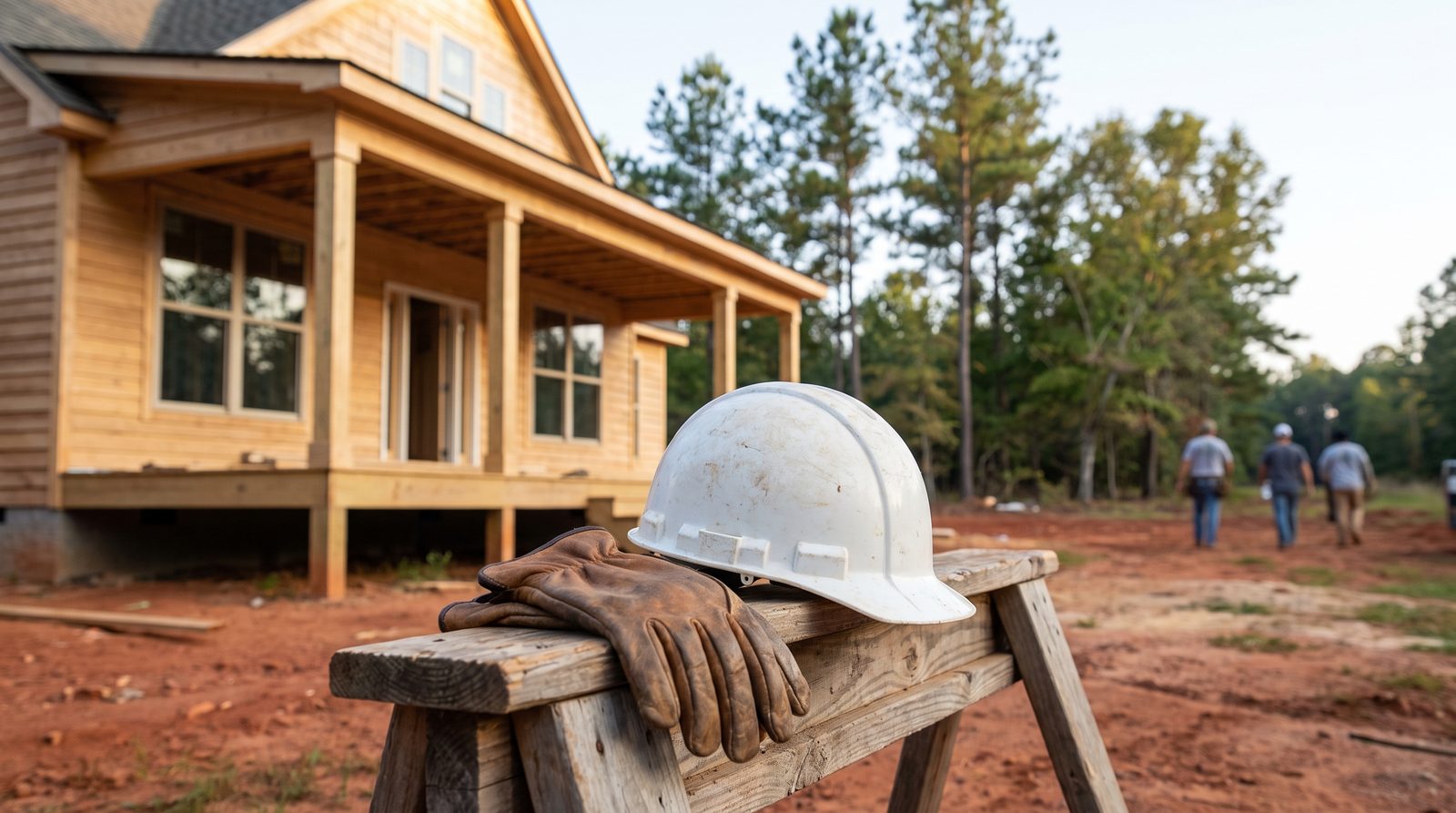
The short answer: almost anyone building a new house for you in North Carolina needs a state general contractor license, and you can look it up free in a few minutes. Check that the license is active, that its level covers the cost of your house, and that you have workers' comp proof, a lien agent and a written contract before work starts. If things go wrong, the state licensing board can discipline a builder, but it can't get your money back.
Does our builder need a state license?
Under North Carolina's general contractor law, anyone who bids on, builds or manages construction of a building for a fee, where the job costs $40,000 or more, counts as a general contractor and needs a state license.
There is one main exception. If you build on your own land, only for your family to live in, the license law doesn't apply to you. The law presumes otherwise if your family doesn't live there alone for at least 12 months after it's finished. Owners who claim this exemption sign a sworn affidavit with their permit application, promising to personally manage all of the construction and to be present for every required inspection (unless an architect drew and sealed the plans), under Article 1 of the state's contractor law. The permit office sends that affidavit to the licensing board, and the permit is revoked if the exemption didn't apply.
That's why the NC Department of Justice warns families to be suspicious of a builder who asks them to pull the permits and arrange inspections themselves: it may be a sign the contractor isn't licensed.
How do we look up a builder's license?
- Go to the NC Licensing Board for General Contractors' license search. You can search by license number, company name, a person's name, phone, address, city or ZIP. Every field is optional, but you need to fill in at least one.
- According to the board's consumer FAQ, the board's free "NCLBGC Search" app for Android and iPhone also searches by address.
- Look at the result's status, and open the license details. No results means no license matched.
- Check the classification. "Residential contractor" covers builders who build only homes under the North Carolina Residential Code; "Building contractor" covers buildings of all types.
- Note the dates. Licenses expire on January 1 after they are issued or renewed, and become invalid 60 days later unless renewed.
What do limited, intermediate and unlimited mean?
The level tells you the largest single project the builder may take on, under state law:
- Limited: any single project up to $750,000.
- Intermediate: up to $1,500,000.
- Unlimited: no cap.
Those values leave out the cost of the land and related costs of improving the land, so what matters is the cost of building the house itself.
Each level also has a money test behind it. Under a state licensing rule, a limited applicant needs current assets at least $17,000 above current liabilities, or a net worth of at least $80,000. Intermediate requires a $75,000 margin and unlimited $150,000. Instead, an applicant can post a surety bond (a guarantee from a bonding company) of $175,000, $500,000 or $1,000,000. Every applicant must also pass an exam in their classification.
What should we get before we sign?
State law sets some requirements, and consumer officials add advice.
Required by law:
- License and workers' comp proof. Before a city, town or county can issue a permit for work of $40,000 or more, the applicant must show a license (or exemption) and proof of workers' compensation insurance.
- A lien agent. A lien agent is a registered representative, from a title insurance company, who gets notice from subcontractors and suppliers so unpaid bills don't surprise you later as "hidden" liens. Under G.S. 44A-11.1, the owner must name one no later than when first contracting with anyone to improve the property. Owners file the appointment on LiensNC, where the fee is $30 for a one- or two-family home; filings can't be edited or refunded, and the printout is your proof for the permit.
Wake County's permit office, for example, asks for a workers' comp certificate or exemption affidavit and a LiensNC lien agent appointment for projects of $40,000 or more. Septic and well need separate permits.
Advised by NCDOJ:
- A written contract listing all the work, quality of materials, total price, warranties, start and finish dates, and who handles cleanup.
- A look at the builder's insurance policies or bond. Write down the insurer and policy number, and call the insurer to confirm coverage.
- No large payments up front.
- A home inspector or other construction expert to catch problems during construction and before closing.
- A punch list with a deadline before closing; for a long list, consider holding back part of the final payment.
What can the state do if the builder lets us down?
Anyone can file sworn, written charges against a licensed contractor. The board can reprimand, suspend, restrict or revoke a license for problems such as gross negligence, incompetency or misconduct. Complaints are public records. Contracting without a license is a Class 2 misdemeanor, and the board can ask superior court to stop it.
But the board's FAQ is clear: it can't make a contractor do repairs or pay money back. To recover money, you have to go to court.
The board's Homeowners Recovery Fund can help owners of a single-family home who lost money through a licensed contractor's dishonest or incompetent conduct. First, though, you must sue and win a judgment that goes unpaid, and the fund pays only actual losses, not legal fees. The board calls it "a last resort" and "not a swift process."
The Attorney General's office takes home construction complaints at 1-877-5-NO-SCAM.
Sources
- G.S. 87-1 "General contractor" defined; exceptions · NC General Assembly
- NC General Statutes Chapter 87, Article 1 (G.S. 87-10, 87-11, 87-13, 87-13.1, 87-14) · NC General Assembly
- 21 NCAC 12A .0204 License Limitations; Eligibility · NC Office of Administrative Hearings
- Verify License/Qualifier Search · NC Licensing Board for General Contractors
- FAQ for Consumers · NC Licensing Board for General Contractors
- Homeowners Recovery Fund · NC Licensing Board for General Contractors
- Home Improvement · NC Department of Justice · March 30, 2026
- G.S. 44A-11.1 Lien agent; designation and duties · NC General Assembly
- LiensNC Frequently Asked Questions · LiensNC
- Build a New One- or Two-Family Dwelling · Wake County
More on the build
The build
How long does it take to build a house in Wake or Johnston County?
The stages from permits to move-in, using Census building averages and the review waits Wake and Johnston counties and state law set out.
The build
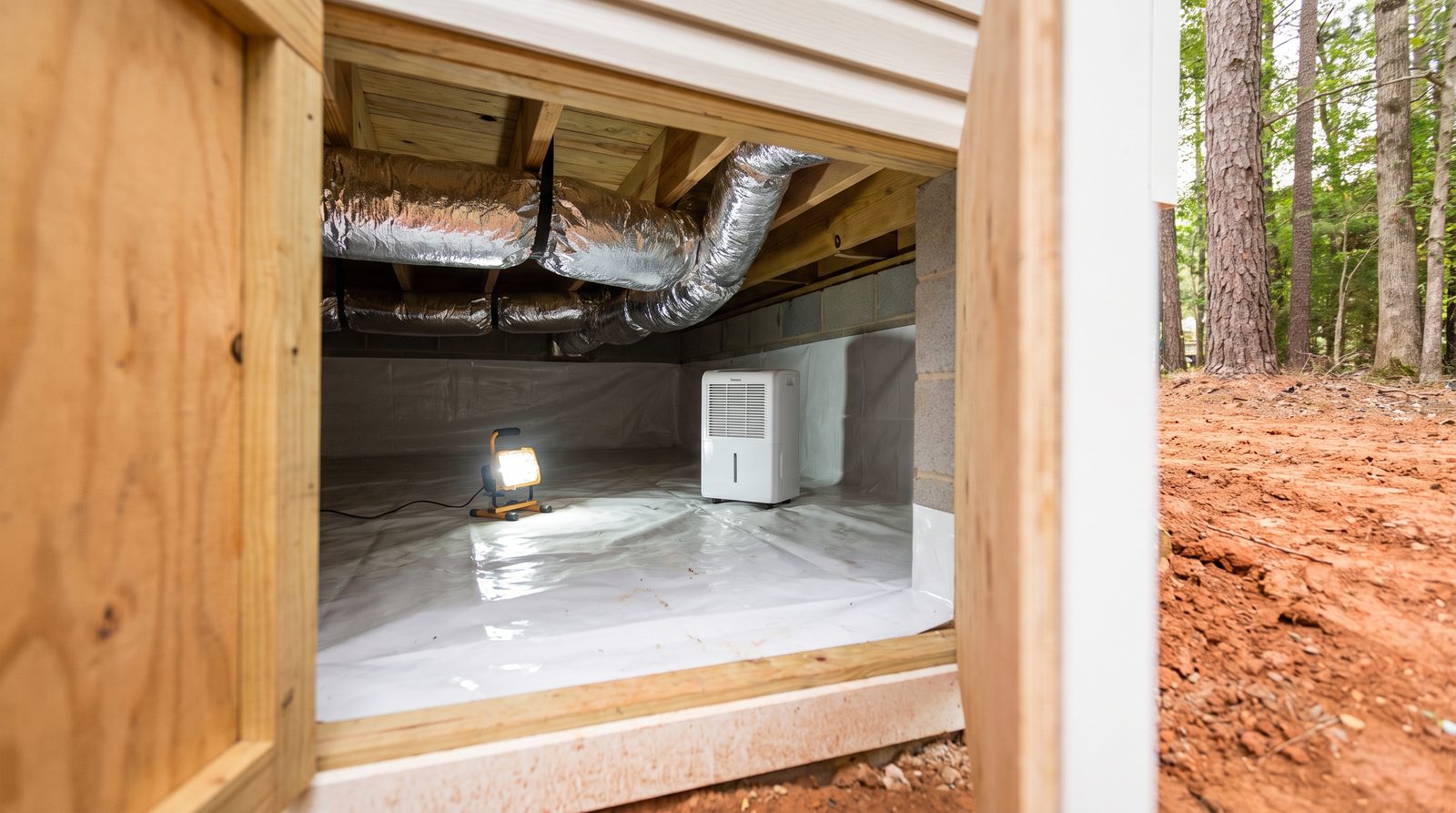
Crawl space or slab: which foundation suits a new Triangle home?
What most new homes in the South sit on, what a closed crawl space is, what North Carolina's code requires, and what each choice means for moisture, ducts and termites.