
New state laws limit what Apex, Holly Springs and Fuquay-Varina can require of builders
State laws passed this year change rules on backyard cottages, parking, fees and approved plans in Apex, Holly Springs and Fuquay-Varina, with dates running into 2027.
A set of laws passed by the North Carolina General Assembly this year will change how Apex, Holly Springs and Fuquay-Varina regulate growth, according to a Sept. 25 report by Holly Springs Update. The window-glass limit took effect Thursday, Oct. 1. The vesting, fee and home-business changes took effect when the laws were signed in July and August, and the parking and ADU rules follow in 2027.
The laws cover parking, stormwater, how long approved plans stay protected, development fees, home businesses and accessory dwelling units, often called ADUs. Most of the changes come from the 2026 Regulatory Reform Act, Senate Bill 445, enacted as Session Law 2026-59.
The Oct. 1 change applies to commercial buildings. Under the law, no local government may require windows, doors or storefront glass to cover more than 35% of the ground-floor facade of a commercial or mixed-use building. Holly Springs Update reports a 20% limit for some non-storefront uses, such as medical, religious and educational buildings.
Backyard cottages
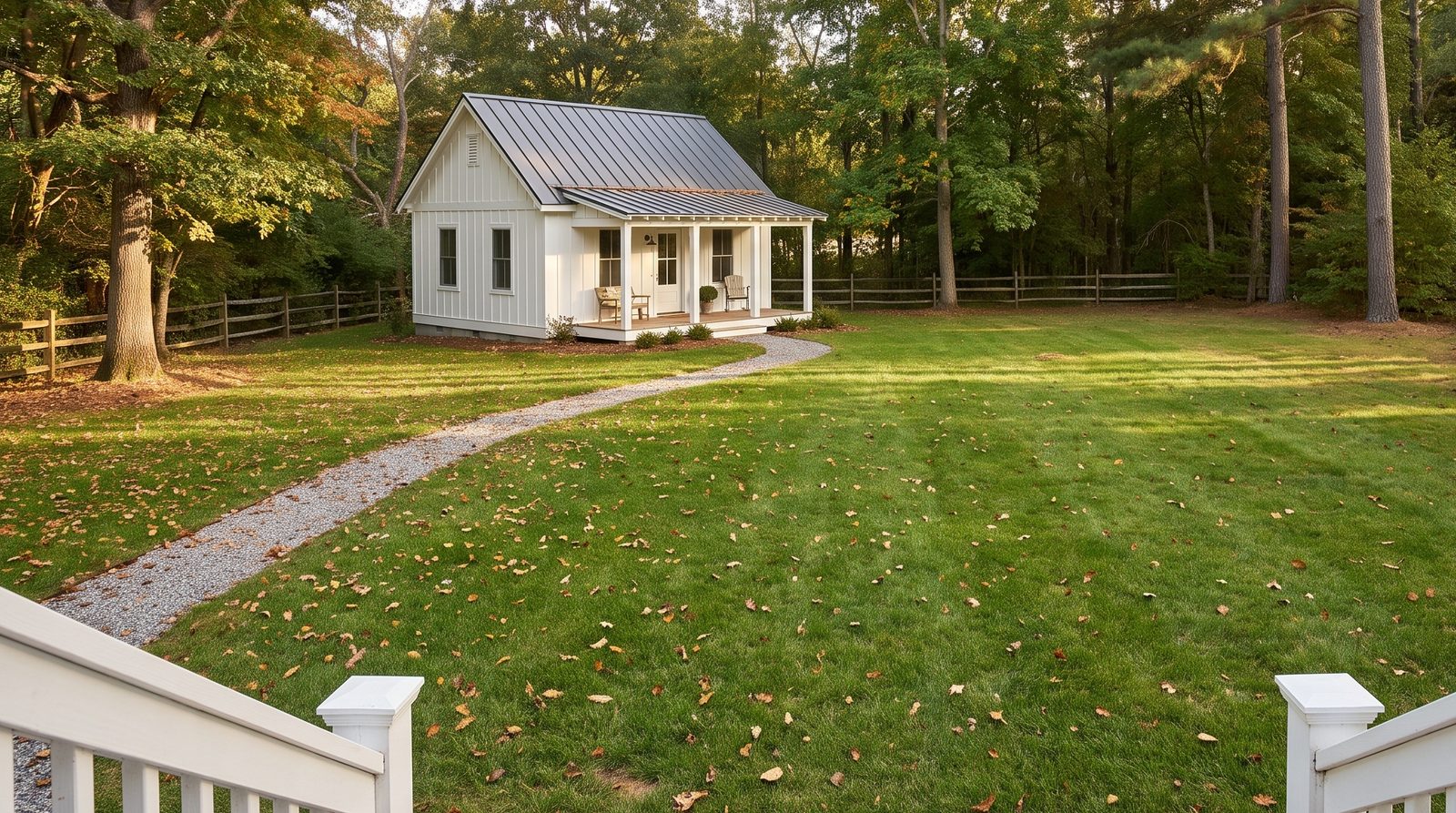
The ADU rule is likely to matter most to homeowners and lot buyers. Starting January 15, 2027, covered towns must allow at least one ADU with each detached single-family home in residential areas where those homes are allowed, Holly Springs Update reports. An ADU can be an apartment over a garage, a converted part of an existing building, or a smaller detached home on the same lot.
For an ADU, a town cannot require extra parking or a conditional rezoning. It also cannot ban long-term rental of the main house and the ADU to separate households, or block hookups to existing utilities when there is enough capacity. Towns keep some say over placement, setbacks and size. A maximum size, if a town sets one, must fall between 800 and 1,000 square feet, and the ADU can be required to be smaller than the main house.
The rule applies only to towns outside the coastal area with at least 50,000 residents. Lot buyers who want to know whether their town is covered should ask its planning department.
Covered towns must adopt compliant rules by July 1, 2027. If a town misses that deadline, the law says ADUs must be allowed there without any limitations. The law does not override private covenants or HOA rules, so a neighborhood's restrictions still apply.
Fees, vesting and parking
Other changes reach anyone building in these towns. Towns must post development-fee schedules online, give an applicant a fee estimate within 10 business days of a completed application, and issue a final, binding fee statement at approval. The final fee generally can't exceed the latest estimate unless the fee schedule has changed.
Protection for an approved site-specific development plan grows from two years to five, and towns can approve up to eight. Vesting generally shields an approved project from later rules that would harm or delay it, with exceptions in state law.
A separate law, House Bill 162, bars local minimum parking requirements. State law already barred requiring most parking spaces larger than 9 by 20 feet; HB 162 only reworded that limit to cover off-street spaces. Holly Springs Update says the parking rule starts in the three towns on Jan. 1, 2027. Another, House Bill 376, gives redevelopment projects credit for existing pavement and buildings when figuring stormwater rules; towns must update their programs by July 2, 2027. House Bill 372 stops towns from banning a "no-impact home-based business" or requiring a permit just to run one, though covenants and HOA rules still apply.
What stays local
Holly Springs Update notes that the towns still control rezonings, comprehensive planning, utility capacity, transportation, subdivision design and development approvals. As Holly Springs Update put it, "it increasingly matters what state law allows the town to require."
The news site's report gives January 15 and July 1 without a year. The law itself sets those ADU dates as Jan. 15, 2027, and July 1, 2027.
Sources
- NC lawmakers changed the rules for growth. Here's what it means for Holly Springs, Apex and Fuquay-Varina · Holly Springs Update · September 25, 2026
- SL 2026-59 (SB 445) · North Carolina General Assembly
Get the weekly email
The new guides and news for families building in the Triangle, once a week. Free.
More news
News · October 2, 2026
Wake County's 2027 revaluation: what it means for your lot or new house
Wake commissioners hold a hearing Oct. 5 on the rulebook appraisers will use to value every lot and home, including houses still being built.

News · October 2, 2026
Poole Road widening in Wake County: what it means if you're buying land nearby
NCDOT wants to make Poole Road four lanes from Barwell Road to Hodge Road. Here's what would change, the rough timeline, and how to comment by Oct. 12.

News · October 1, 2026
Johnston County pushes UDO vote to Nov. 16, with Planning Board review Oct. 20 and public hearing Nov. 2
The new rulebook for building in unincorporated Johnston County faces a Planning Board review and a Nov. 2 public hearing before a possible vote.